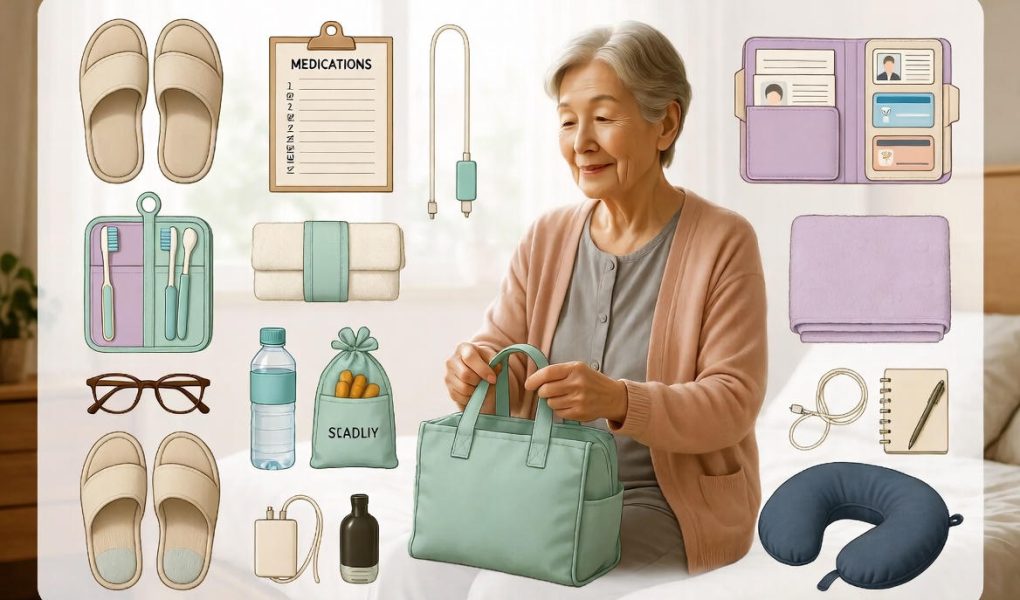
A well-prepared hospital bag checklist for elderly is essential for seniors who may require longer hospital stays, ongoing treatments, scheduled procedures, or unexpected emergencies. Older adults often need additional medical documents, mobility support, medications, comfort items, and caregiver essentials. This comprehensive guide ensures seniors and family members are fully prepared for hospital admission, reducing stress and improving safety during treatment.
Quick Summary Table
| Category | Elderly Essentials |
|---|---|
| Documents | ID, insurance, medication list, medical history |
| Medication | Daily meds, dosage list, pill organizer |
| Comfort | Robe, slippers, blanket, hearing aids |
| Hygiene | Toiletries, wipes, tissues, dentures supplies |
| Mobility | Cane, walker, compression socks |
| Caregiver | Notebook, emergency contacts, snacks |
Why Elderly Patients Need a Special Hospital Bag
Seniors often have mobility challenges, special dietary needs, fragile skin, chronic medications, cognitive limitations, or medical devices that make hospital packing more complex. A dedicated bag ensures medications are not forgotten, medical teams have accurate information, and elderly patients feel safe, comfortable, and supported.
When to Pack the Hospital Bag
- Chronic conditions: Keep a packed bag ready at all times.
- Scheduled procedures: Pack 3–5 days before admission.
- Seniors living alone: Caregiver should keep a pre-packed bag.
- Memory impairment: Maintain a permanent bag for emergencies.
Full Hospital Bag Checklist for Elderly
1. Medical Documents & Identification
- Government ID or passport
- Insurance card
- Full medication list with dosages
- Allergy list (food, drug, latex)
- Medical history summary
- List of doctors and specialists
- Emergency contact information
- Advanced directives (if applicable)
2. Medications & Supplies
- Daily medications in original containers
- Pill organizer for easy use
- Diabetes supplies (glucometer, strips)
- Inhalers or oxygen attachments
- Blood pressure log (if available)
- Eye drops or ear drops
3. Clothing & Comfort
- Robe or loose-fitting clothing
- Non-slip socks
- Comfortable slippers
- Warm blanket or shawl
- Soft pillow from home (optional)
- Extra underwear
- Hearing aids + extra batteries
- Glasses + case
- Dentures + cleaning supplies
4. Hygiene & Personal Care
- Toothbrush + toothpaste
- Face wipes
- Moisturizing lotion (for dry skin)
- Comb or hairbrush
- Deodorant
- Tissues and wet wipes
- Adult diapers (if needed)
- Skin barrier cream (for fragile skin)
5. Mobility & Safety Tools
- Cane or walker
- Compression socks
- Portable grabber tool
- Anti-slip mats (optional)
- Neck support pillow
6. Entertainment & Mental Comfort
- Large-print book or magazine
- Tablet with charger
- Phone + long charger
- Notebook for questions
- Crossword or puzzle book
7. Snacks & Hydration (If Allowed)
- Crackers or biscuits
- Protein drinks or supplements
- Water bottle (if hospital-approved)
- Sugar-free snacks for diabetics
8. Caregiver Essentials
- Emergency contact sheet
- Notebook + pen
- List of patient preferences
- Phone charger
- Snacks and water
What NOT to Pack for Elderly Patients
- Valuable jewelry
- Large electronics
- Heavy blankets
- Multiple outfits
- Food that spoils easily
- Strong perfumes or scented lotions
Common Mistakes When Packing for Elderly Patients
- Forgetting the full medication list
- No emergency contacts in the bag
- Not labeling medical devices
- Packing clothes that are hard to remove
- Not bringing hearing aid batteries
- No comfort items for anxiety reduction
Packing Timeline for Seniors
Weekly
- Check medications and refill if needed
- Update medical records and contact info
Before Scheduled Admission
- Pack fresh clothes
- Add daily medications
- Bring mobility aids
For Emergency Situations
- Keep a pre-packed bag near the door
- Store duplicate medications in the bag
- Caregiver should know where the bag is
Expert Tips
- Label everything with the patient’s name.
- Keep all medical documents in a waterproof folder.
- Pack slip-on shoes to avoid bending.
- Ensure hearing aids and glasses are always in the bag.
- Use zip bags to separate medications, toiletries, and clothes.
- Bring comfort items to reduce anxiety and confusion.
Conclusion
This complete hospital bag checklist for elderly ensures seniors have everything needed for a safe, comfortable, and well-organized hospital stay. With essential documents, medications, mobility aids, hygiene supplies, and caregiver support packed ahead of time, elderly patients can feel secure and prepared. For more care-planning guides, you may also find our helpful Hospital Bag Checklist for Grandma especially useful.
FAQ
1. What is the most important item elderly patients should bring?
The medication list and medical history—these help doctors provide safer treatment.
2. Should seniors bring their own medications?
Yes, in original containers, plus a printed dosage list.
3. Do elderly patients need mobility aids at the hospital?
Yes—cane or walker helps prevent falls.
4. What clothing is best for elderly patients?
Loose, comfortable, easy-to-remove clothing.
5. Should caregivers pack a separate bag?
Yes—caregivers need snacks, chargers, and a notebook.