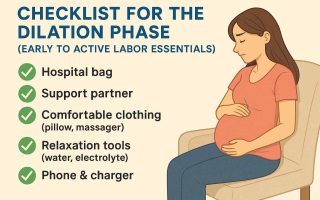

Knowing how to stay calm before labor can dramatically transform your birth experience. As your due date approaches, it’s natural to feel a mixture of excitement, nervousness, fear, or overwhelm. But with the right techniques—rooted in breathing, mindset, preparation, and emotional grounding—you can enter labor feeling steady, confident, and mentally ready. This guide offers simple, effective, science-backed methods to help you stay calm before childbirth. For additional preparation resources, you can also explore our complete Hospital Bag Checklist.
Quick Summary: How to Stay Calm Before Labor
| Category | Calming Techniques |
|---|---|
| Breathing | 4-7-8 breath, box breathing, slow release exhale |
| Mindset | Affirmations, reframing fear, positive birth stories |
| Preparation | Hospital bag ready, birth plan review, tour |
| Relaxation | Meditation, warm showers, stretching |
| Support | Partner guidance, doula techniques, grounding |
Why Staying Calm Before Labor Matters
Your mental state influences your birth hormones, pain tolerance, and ability to cope with contractions. When you stay calm, your body produces more oxytocin and endorphins—natural comfort hormones that support smoother labor. Anxiety, on the other hand, tightens muscles and increases pain perception. A calm mindset creates:
- More efficient contractions
- Better breathing control
- Lower stress and tension
- Improved birth satisfaction
- Healthier emotional transition into motherhood
When Should You Start Calming Exercises?
- Light practice: Weeks 30–34
- Daily calming routine: Weeks 35–40
- During early labor: use breathing + grounding
How to Stay Calm Before Labor: Complete Guide
1. Use Slow and Deep Breathing
Breathing is the most powerful tool to keep anxiety down. Try:
- 4-7-8 method: inhale 4, hold 7, exhale 8
- Box breathing: inhale-hold-exhale-hold (4 counts each)
- Exhale-focused breathing: inhale 4, exhale 6
Slow exhalation reduces adrenaline and centers the mind.
2. Practice Calming Visualizations
- Imagine your cervix softening and opening smoothly
- Picture contractions as gentle ocean waves
- Visualize meeting your baby soon
3. Use Positive Birth Affirmations
- “I trust my body and this process.”
- “I breathe in calm; I exhale fear.”
- “My body was made for this.”
4. Create a Calming Environment
- Dim lighting
- Soft music or white noise
- Aromatherapy (lavender, chamomile)
- Warm, comfortable clothing
5. Limit Negative Input
Avoid anything that spikes anxiety:
- Traumatic birth stories
- Dramatic labor videos
- Forums with fear-based posts
- People who scare you with their “horror stories”
6. Learn What Labor Really Feels Like
Understanding the stages of labor removes fear of the unknown. Research:
- Early vs. active labor
- Transition phase
- Pushing mechanics
- Pain management options
7. Do Gentle Movement
- Prenatal yoga
- Stretching
- Slow walks
Movement releases tension and boosts happy hormones.
8. Talk Through Your Fears
Speak with your partner, doula, or provider. Naming your fears reduces their power and helps you feel supported.
9. Create a Comfort Kit
Your “calm bag” may include:
- Stress ball
- Cooling towel
- Eye mask
- Comfort playlist
- Essential oils
- Headphones
10. Use Grounding Techniques
- 5-4-3-2-1 sensory grounding
- Focus on a warm or cool object
- Hold partner’s hand and match breathing
11. Prepare Your Hospital Bag Early
Packing early reduces mental stress. Include:
- Calming items (blanket, music, aromatherapy)
- Comfort clothing
- Snacks and hydration
12. Build a Supportive Partner Plan
- Partner guides breathing during anxiety
- Partner uses touch: massage, pressure, hand-holding
- Partner advocates when you feel overwhelmed
What NOT to Do Before Labor
- Don’t watch negative birth videos
- Don’t read every medical detail online
- Don’t isolate yourself with fears
- Don’t assume something will go wrong
Common Mistakes Moms Make Before Labor
- Preparing physically but not mentally
- Over-consuming fear-based content
- Leaving questions unanswered
- Not practicing breathing until labor starts
- Ignoring emotional needs
Week-by-Week Calming Plan
Weeks 30–33
- Start breathing practice
- Begin learning about labor stages
Weeks 34–36
- Daily meditation or stretching
- Create birth affirmations
- Build a calming environment at home
Weeks 37–40
- Deep breathing when feeling anxious
- Short naps and rest
- Focus on positive expectations
Expert Tips to Stay Calm Before Labor
- Use scent association—smell a calming scent daily to “train” your brain to relax.
- Practice breathing during Braxton Hicks to mimic contractions.
- Keep your phone on Do Not Disturb during your calming routines.
- Prepare a “mental coping playlist.”
- Repeat affirmations before bed for deeper calm.
Conclusion
Learning how to stay calm before labor helps you enter childbirth with clarity, confidence, and emotional strength. By using breathing, grounding techniques, preparation, and emotional support, you can transform fear into calmness and approach labor with peace. For more labor support guides, visit this related article, including our helpful Hospital Bag Checklist for Epidural Moms.
FAQ
1. What is the fastest way to calm down before labor?
Slow, deep breathing works instantly to reduce anxiety and relax your body.
2. How do I stop overthinking before giving birth?
Use grounding techniques, limit negative stories, and focus on positive labor knowledge.
3. How can my partner help me stay calm?
By guiding breathing, providing comfort touch, and helping create a relaxing environment.
4. Should I meditate before labor?
Yes—short daily meditations reduce fear and help your mind stay centered.
5. Does staying calm really make labor easier?
Absolutely—calm mothers have smoother contractions, better oxygen flow, and more coping strength.