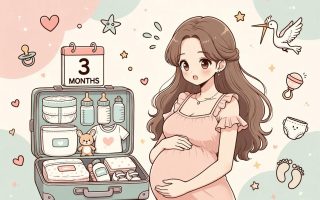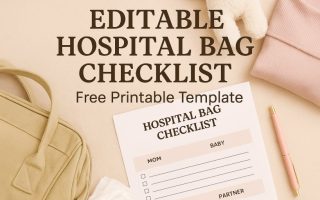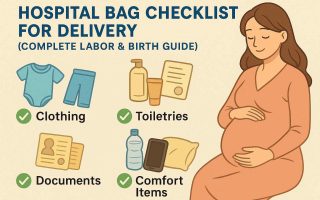
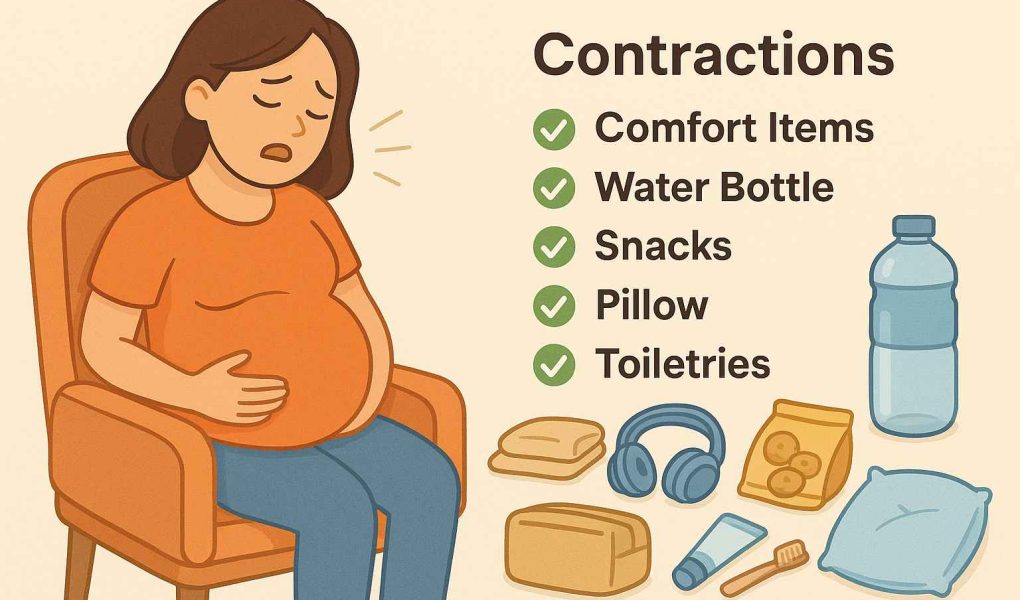
Preparing a hospital bag checklist for contractions ensures you are ready the moment early labor begins. Contractions can start unexpectedly, intensify quickly, and often require immediate monitoring at the hospital. Unlike a traditional delivery or postpartum bag, a contractions-focused bag prioritizes mobility, pain-relief tools, hydration, comfort, and quick-access essentials that support you through both early and active labor. This guide gives you everything you need to stay calm and supported during the contraction phase.
Quick Summary Table
| Category | Key Contraction Essentials |
|---|---|
| Pain Relief | Massage tools, heating pad, essential oils, lip balm |
| Hydration | Water bottle with straw, electrolyte drinks |
| Comfort | Robe, socks, loose clothing |
| Electronics | Long charger, earbuds, playlist |
| Snacks | Crackers, granola bars, fruit pouches |
| Partner | Snacks, charger, clothes, wallet |
Why You Need a Contraction-Specific Hospital Bag
Contraction bags must be fast, compact, and organized. When contractions begin, it becomes harder to search through large luggage or multiple zippers. You need quick-access pain relief, hydration, documents, and comfort items that work whether your contractions are five minutes apart or still irregular. This bag gives you immediate control during a stage where your physical comfort and mobility matter most.
When to Pack Your Contractions Bag
- Week 32–34: Start organizing essentials and pain-relief tools.
- Week 35–36: Finalize all items and zip the bag.
- High-risk or earlier contractions: Pack fully by week 30.
Keep the bag by the door or in the car starting at week 36.
Full Hospital Bag Checklist for Contractions
1. Pain-Relief & Comfort Tools
- Massage ball or handheld massager
- Heating pad (if hospital allows)
- Cooling towel or portable fan
- Essential oils (lavender or peppermint)
- Lip balm (hospital air is dry)
- Moisturizing lotion
- Warm socks for labor chills
2. Hydration & Light Snacks
- Reusable water bottle with straw
- Electrolyte drinks
- Granola bars
- Crackers or pretzels
- Soft fruit pouches
3. Clothing for Contraction Comfort
- Loose labor gown or oversized T-shirt
- Soft robe for walking through contractions
- Non-slip socks
- Slip-on shoes or sandals
- Hair ties, clips, and headband
4. Toiletries
- Toothbrush + toothpaste
- Face wipes
- Deodorant
- Dry shampoo
- Contact lens supplies (if needed)
5. Electronics for Labor Support
- Long phone charger (6–10 ft)
- Earbuds or headphones
- Relaxation playlist or affirmations downloaded
- Portable power bank
6. Essential Documents
- ID card
- Insurance card
- Prenatal records
- Birth plan (optional)
7. Partner Essentials
- Change of clothes
- Toiletries
- Snacks + drinks
- Phone charger
- Wallet with cash + ID
- Comfortable shoes
8. Baby Items (Minimal, for Early Stage Only)
- Going-home outfit
- Swaddle blanket
- Newborn hat + socks
- Car seat installed in the car
What NOT to Pack for Contractions
- Thick books or tablets you won’t use
- Multiple baby outfits
- Expensive jewelry
- Large pillows
- Full-size toiletries
- Extra shoes or fashion clothing
- Bulky blankets from home
Common Contraction Bag Mistakes
- Packing too many postpartum items for early labor
- Bringing short charging cables
- No hydration or snacks
- Overpacking baby gear
- Ignoring partner essentials
- Bringing valuables that could get lost
Timeline Packing Guide
Week 30–32
- Gather pain-relief items like massage tools and heating pad
- Download playlists or affirmations
Week 33–35
- Add clothing, toiletries, hydration items
- Organize partner essentials
Week 36–40
- Keep bag by the door
- Check chargers and snacks weekly
Expert Tips
- Create a “quick-access pouch” for lip balm, charger, and wipes.
- Use a backpack instead of a large suitcase for mobility.
- Pack a robe that opens easily for monitoring and IV placement.
- Bring electrolyte drinks—they help sustain energy during contractions.
- Have two chargers: one for you, one for your partner.
- Keep all documents in a waterproof folder.
- Prepare partner snacks—they need energy too.
Conclusion
This hospital bag checklist for contractions helps you stay organized, supported, and comfortable during early and active labor. By focusing on pain relief, hydration, comfort clothing, and partner essentials, you’ll have everything needed to manage contractions confidently. For more labor preparation guides, you may also find our helpful Hospital Bag Checklist for Twins Moms especially useful.
FAQ
1. What should I pack first for contractions?
Start with pain-relief tools like massage balls, lip balm, and a long charger.
2. Do I need snacks during contractions?
Yes—light snacks help maintain energy before active labor.
3. Should I bring a labor gown?
Yes, loose clothing or a labor gown makes monitoring easier.
4. How many baby items do I need for contractions?
Only a going-home outfit; baby items are used after delivery.
5. Do partners need their own essentials?
Yes—partners need clothes, snacks, toiletries, and a charger.