Packing your hospital bag for labor and delivery is exciting — but it’s also easy to overpack. Many parents bring unnecessary, bulky items that take up space and add stress during an already intense moment. This guide highlights exactly what NOT to pack in your hospital bag, why these items aren’t needed, and what to bring instead. Packing smart keeps your room organized, makes moving easier, and ensures you have only what truly helps during labor, delivery, and postpartum recovery.
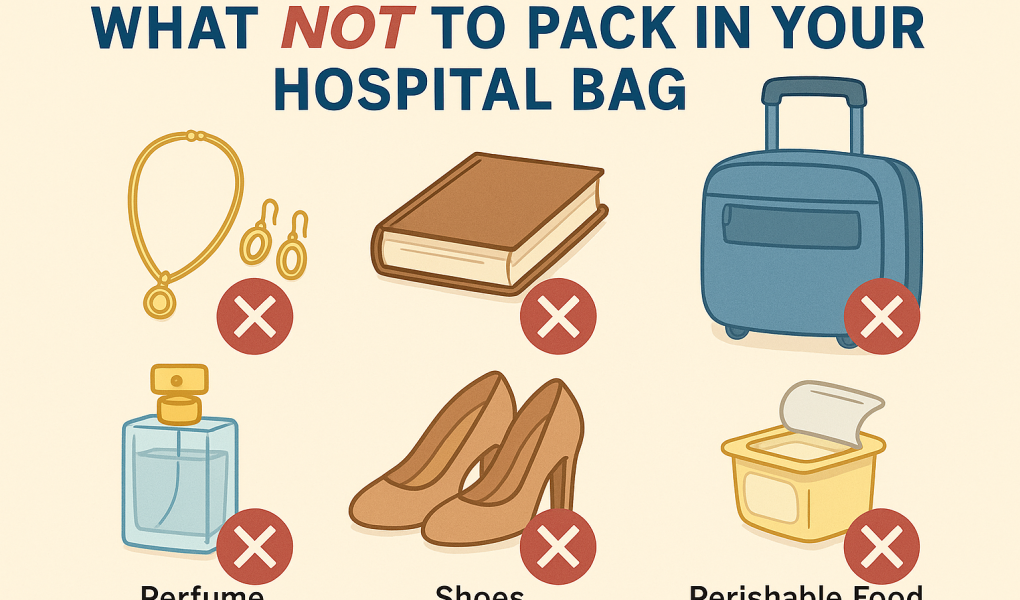
Quick Summary Table (Things You Should NOT Pack)
| Item | Reason to Avoid |
|---|---|
| Too many outfits | Hospital gowns + short stay = no need for extras |
| Full-size toiletries | Bulky; hospital stay is short |
| Thick baby coats | Unsafe in car seats |
| Expensive jewelry | Easily lost during labor |
| Large pillows + blankets | Take too much space in small rooms |
| Books or heavy items | No time/energy to use them |
| Excess baby accessories | Hospital provides essentials |
Why You Should Avoid Overpacking
Most first-time parents pack too much because they’re unsure what the hospital provides. But overpacking leads to:
- Cluttered hospital rooms
- Harder bag transport during discharge
- Stress while searching through items
- Wasted money on unnecessary products
The truth is: keeping your bag simple helps you focus on labor, recovery, and bonding with your baby — not digging through piles of things you don’t need.
What NOT to Pack in Your Hospital Bag
1. Too Many Outfits for Mom
Labor and delivery gowns are provided by the hospital.
- Avoid: multiple pajamas, dresses, robes
- Why: hospital stay is short (1–3 days)
- Bring instead: 1 going-home outfit + 1 comfortable robe
2. Full-Size Toiletries
- Avoid: large shampoo, conditioner, skincare bottles
- Why: they take space, leak easily, and you won’t use them all
- Bring instead: travel-size basics
3. Makeup Bags or Full Beauty Kits
- Avoid: full makeup sets, hair styling tools
- Why: most moms don’t use them postpartum
- Bring instead: lip balm + light moisturizer
4. Thick Baby Jackets and Heavy Outerwear
- Avoid: bulky coats, fleece suits
- Why: unsafe in car seats and too warm indoors
- Bring instead: a warm blanket
5. Too Many Baby Clothes
- Avoid: multiple outfits, socks, accessories
- Why: baby lives in hospital-provided swaddles most of the time
- Bring instead: 1 onesie + 1 going-home outfit
6. Your Entire Diaper Bag
- Avoid: diapers, wipes, rash creams
- Why: hospital provides newborn diapering supplies
- Bring instead: optional diaper cream only
7. Multiple Swaddles and Blankets
- Avoid: 2–3 swaddles + multiple blankets
- Why: hospital blankets are perfect for newborns
- Bring instead: 1 muslin swaddle + 1 going-home blanket
8. Books or Heavy Reading Materials
- Avoid: novels, journals, magazines
- Why: you will be resting, nursing, or focusing on baby
- Bring instead: your phone for short reading breaks
9. Expensive Jewelry and Valuables
- Avoid: wedding rings, necklaces, bracelets
- Why: easy to lose when removing for procedures
- Bring instead: nothing valuable
10. Large Pillows or Oversized Blankets
- Avoid: big home pillows or comforters
- Why: hospital rooms have limited space
- Bring instead: a pillowcase from home
11. Fancy Labor Gadgets
- Avoid: massagers, aromatherapy kits, elaborate tools
- Why: unnecessary for most labors
- Bring instead: 1–2 simple comfort tools
12. Breast Pumps
- Avoid: pumps and accessories
- Why: hospital has medical-grade pumps if needed
- Bring instead: nothing unless instructed
13. Large Cash Amounts
- Avoid: wallets full of cash or cards
- Why: risk of loss or theft
- Bring instead: one card + ID
14. Excess Snacks
- Avoid: big snack bags, drinks, coolers
- Why: limited storage, hospital has vending machines
- Bring instead: 3–4 small snacks
15. Home Baby Bottles and Formula
- Avoid: bottles and cans of formula
- Why: hospital provides sterile feeding supplies
- Bring instead: nothing unless medically required
Common Mistakes Parents Make
- Thinking they need to pack for a week-long stay
- Duplicating hospital-provided items
- Packing for baby like a full nursery
- Bringing luxury comfort items that never get used
- Packing thick jackets or unsafe newborn outfits
Timeline Preparation (To Avoid Overpacking)
32–34 Weeks
- Review hospital-provided list
- Remove duplicate items
- List only essentials
34–36 Weeks
- Pack clothing + documents
- Add labor tools and toiletries
- Keep baby items minimal
36–37 Weeks
- Double-check what NOT to pack
- Remove unnecessary items
- Finalize the bag
Expert Tips to Avoid Overpacking
- Pack for 24–48 hours — not a full week.
- Ask your hospital what they provide to avoid duplicates.
- Use packing cubes to limit category size.
- Keep one “just-in-case” bag in the car, not in your room.
- Focus on comfort and essentials only — not aesthetics.
By knowing what not to pack in your hospital bag, you create a calmer, cleaner, and more manageable space for one of the biggest milestones of your life. For a complete, well-balanced packing guide, you may also find our comprehensive Hospital Bag Checklist especially helpful.
Frequently Asked Questions
Will I miss anything if I avoid overpacking?
No. Hospitals supply many essentials, and minimal bags keep you organized.
Do I need diapers or wipes?
No. Hospitals provide all diapering essentials for newborns.
Is it unsafe to bring baby jackets?
Yes. Thick jackets are unsafe in car seats; use blankets instead.
Should I bring my breast pump?
No. Hospitals provide pumps if medically needed.
Why shouldn’t I bring large pillows?
They are bulky and difficult to transport; a pillowcase is enough.