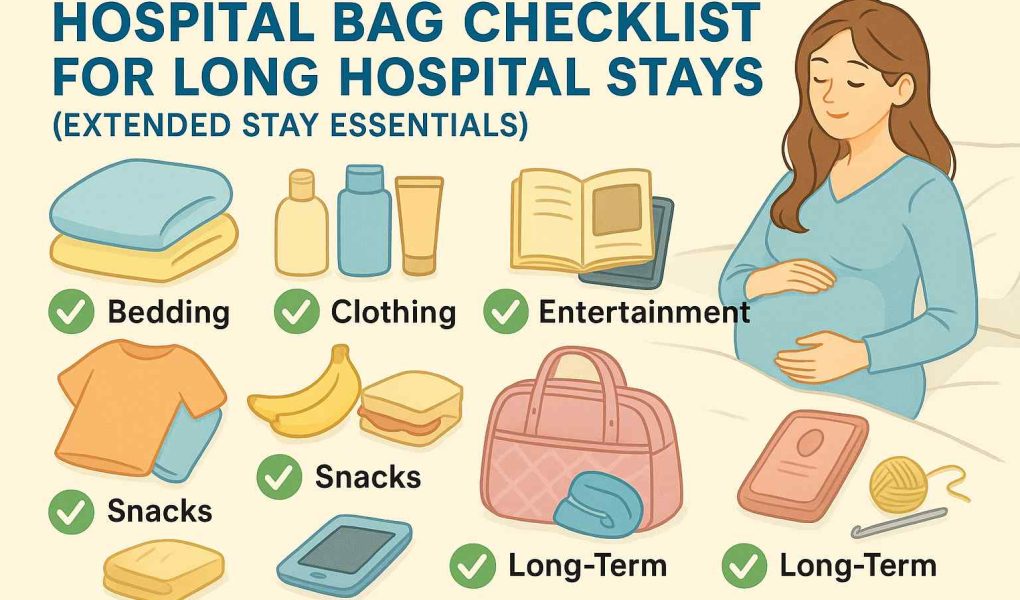
Preparing your hospital bag checklist for long hospital stays requires more planning than a standard delivery bag. Whether you expect complications, a C-section recovery, premature birth, NICU involvement, or simply anticipate staying longer than the usual 1–2 days, you need additional comfort items, hygiene supplies, postpartum tools, baby essentials, and entertainment options. This guide provides a complete extended-stay checklist to keep you comfortable, clean, supported, and fully prepared for a multi-day or week-long hospital stay.
Quick Summary Table
| Category | Extended-Stay Essentials |
|---|---|
| Mom Basics | 3–5 outfits, extended toiletries, comfortable underwear, robe |
| Postpartum | Nursing bras, nipple cream, pads, belly band, peri bottle |
| Baby | Extra outfits, swaddles, diapers, wipes, skincare |
| Partner | Clothes, toiletries, snacks, entertainment |
| Comfort | Pillow, blanket, slippers, long charger, snacks |
| Entertainment | Tablet, headphones, books, charger, journal |
Why Long Hospital Stays Need a Special Bag Checklist
Long hospital stays demand more thoughtful preparation because comfort, hygiene, and mental well-being become even more important over time. Hospitals can feel cold, noisy, and repetitive, making personal comfort items essential. Recovery items may need to be restocked, baby clothes changed more often, and personal belongings like chargers and snacks become crucial. This checklist prioritizes long-term comfort, postpartum care, extended nursing needs, and practical items to keep you and your baby comfortable throughout an extended stay.
When to Pack the Bag
If you anticipate a prolonged hospital stay, follow these guidelines:
- High-risk pregnancies: Pack by week 28–32.
- Planned C-section: Pack by week 34.
- Twin or preterm risks: Pack by week 30.
- Standard pregnancies: Pack by week 34–36.
Always keep the bag easily accessible in case of sudden changes or medical recommendations.
Full Hospital Bag Checklist
1. Mom Essentials
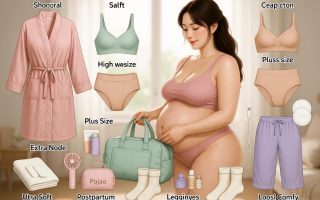
- 3–5 comfortable maternity outfits
- Loose loungewear or yoga pants
- Button-down shirts for breastfeeding
- Comfortable robe
- Multiple pairs of maternity underwear
- Non-slip hospital socks
- Slippers and shower sandals
- Eye mask and earplugs
- Long phone charger (6–10 ft)
2. Extended Toiletries
- Shampoo, conditioner, body wash
- Face wash, moisturizer, toner
- Deodorant
- Hairbrush + hair ties
- Dry shampoo
- Lip balm
- Toothbrush and toothpaste
- Lotion for dry hospital air
- Eye drops (optional)
3. Postpartum Recovery Essentials
- Nursing bras (2–3)
- Nipple cream
- Belly support band
- Disposable postpartum underwear
- Maternity pads or heavy-flow pads
- Peri bottle for rinsing
- Witch hazel pads
- Cooling or numbing spray for perineal relief
- Comfortable going-home outfit
4. Baby Essentials for Long Stays
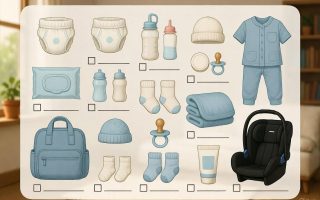
- 4–6 newborn onesies
- 2–3 swaddle blankets
- Newborn hats + mittens
- Extra baby socks
- Baby lotion and diaper cream
- Water-based wipes
- Diapers (hospital supplies but extras help)
- Baby nail file
- Car seat for discharge
5. Partner Essentials (Extended Stay)
- 2–3 outfits
- Personal toiletries
- Pillow and blanket
- Phone + charger
- Snacks and drinks
- Entertainment (tablet, games, books)
- Wallet + ID + hospital documents
6. Comfort & Environment Items
- Pillow from home
- Soft blanket
- Reusable water bottle
- Essential oils or calming spray (if allowed)
- Folder for documents
- Towel (hospital towels are rough)
7. Entertainment & Mental Health
- Tablet with movies or shows
- Headphones
- Books or magazines
- Journal and pen
- Apps for meditation or tracking feeding
8. Weather or Condition-Specific Items
- Winter: Warm pajamas, thick blanket, fuzzy socks
- Summer: Lightweight clothing, fan, cotton blankets
- Dry climates: Extra moisturizer + lip balm
- Rainy seasons: Waterproof bag cover
What NOT to Pack
- Excessively large suitcases
- All breastfeeding equipment (pump not required)
- Fancy newborn outfits
- Too many diapers
- Heavy blankets that cause overheating
- Expensive jewelry
- Full-size electronics you won’t use
Common Mistakes During Long Stays
- Packing too few clothing changes
- Underestimating hygiene needs
- Not bringing comfort items like pillows or blankets
- Forgetting partner essentials
- Ignoring entertainment for downtime
- Not preparing a folder for paperwork and documents
Timeline Packing Guide
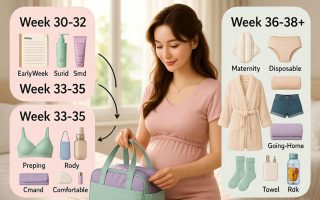
Week 28–32
- Buy postpartum supplies and long-stay essentials
- Prepare extended toiletries and clothing sets
Week 33–36
- Organize the bag into categories
- Add documents and final baby items
- Check electronics and chargers
Week 37–40
- Keep bag ready near the door
- Refresh snacks and water
- Double-check baby’s going-home outfit
Expert Tips for Long Hospital Stays
- Pack clothing in cubes or zip bags for easy access.
- Bring extra pajamas because postpartum recovery can be messy.
- Use a pillow from home for better sleep and comfort.
- Pack both NB and 0–3M outfits for baby.
- Carry snacks that don’t require refrigeration.
- Download shows or music playlists ahead of time.
- Ask your partner to rotate fresh clothes from home if needed.
- Keep your toiletries stocked for hygiene during extended stays.
Conclusion
This hospital bag checklist for long hospital stays ensures you, your baby, and your partner remain comfortable, supported, and fully prepared throughout an extended recovery period. With extra clothing, enhanced postpartum care tools, hygiene supplies, and comfort items, this bag will make your stay smoother and more manageable. you may also find our helpful Hospital Bag Checklist for Natural Birth especially useful.
FAQ
1. How many outfits do I need for a long hospital stay?
Pack 3–5 outfits for yourself and 4–6 newborn outfits for your baby.
2. Do I need extra toiletries for long stays?
Yes, extended stays require full hygiene kits including shampoo, conditioner, and moisturizer.
3. Should partners pack more items for long stays?
Yes, partners should bring multiple outfits, toiletries, and comfort items.
4. Do I need entertainment for long stays?
Yes, bring books, a tablet, or headphones to pass time during recovery.
5. Does the hospital provide postpartum supplies?
Most hospitals provide pads and basic supplies, but bringing your own ensures comfort.